Video Library
Captioned, bilingual videos on the science, the survey work, and the decisions facing American Sāmoa.

Mo Lo Tatou Lumana'i Ocean Forum
The Community Ocean Forum & Solidarity Gathering, organized by Finafinau, was held at the American Samoa Community College (ASCC) on June 19, 2026. The gathering brought together community members to discuss deep-sea mining and its potential environmental, cultural, and economic implications, as well as the relationship between American Samoa and the United States and other related issues.
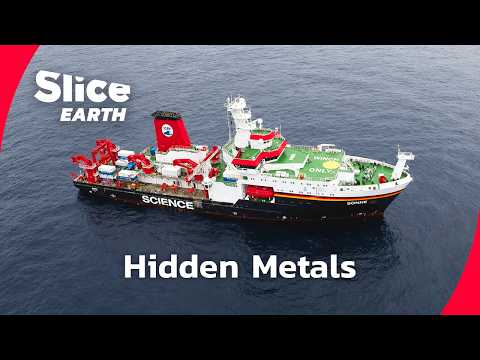
Deep-Sea Mining: Why Industry Is Turning to the Ocean Floor | Part 1
The deep Pacific seafloor is becoming a new industrial frontier due to rising demand for critical metals. This article explores the reasons behind the industry's turn to deep-sea mining.

Nodules: Deep-Sea Life Giver or Key to Our Energy Future?
The discovery of 'dark oxygen' shifted the direction of a documentary on deep-sea mining, raising questions about whether nodules are vital for deep-sea life or key to future energy.

The $16 TRILLION Race to Mine the Ocean
The $16 trillion race to mine the ocean floor for valuable minerals, highlighting the economic stakes and environmental concerns.

Message to the Australian Government: Stop Deep Sea Mining
A message urges the Australian government to halt deep-sea mining, citing threats to marine ecosystems and Pacific Islander ways of life. The article examines pros and cons for the region.

Lucy Murray reports on deep-sea mining in the Cook Islands (2022 ...
Lucy Murray reports on deep-sea mining in the Cook Islands, highlighting its impact on the Pacific's fragile ecosystem. The documentary was produced with SBS Australia and Al Jazeera English's 101 East.

Deep sea mining: Into the deep | 60 Minutes Archive - YouTube
Rare earth elements and metals for electronics lie on the ocean floor, ready for deep sea mining. A 60 Minutes report explores the potential and risks.

The mesopelagic realm: connections to fisheries and mining
The mesopelagic zone, between the surface and seafloor, is a vast habitat where fisheries and deep-sea mining may intersect, raising ecological and regulatory concerns.

Protecting The Deep Sea In The Clarion-Clipperton Zone
IFLScience visited the Natural History Museum's new gallery 'Fixing Our Broken Planet' and spoke to deep-sea researcher Dr Adrian Glover about unique creatures in the Clarion-Clipperton Zone and threats from deep-sea mining.

The Mysteries of Earth's Largest Ocean | Big Pacific | Full Episode 1 | PBS
The Mysteries of Earth's Largest Ocean | Big Pacific | Full Episode 1 | PBS PBS 1790000 subscribers 20076 likes 2832533 views 9 Aug 2024 Watch more of this series with PBS Passport: https://to.pbs.org/2rxTvJS | #BigPacificPBS Man has explored land, the ocean’s surface, and large parts of the solar system, and in the 21st century we are just beginning to explore the depths of the Pacific Ocean. We yearn to unravel the mysterious Pacific – but she does not give up her secrets willingly. [Originally aired in 2017] Mysterious | Big Pacific This program is made possible by viewers like you. Support your local PBS station: https://www.pbs.org/donate Subscribe to the PBS channel for more clips: https://www.youtube.com/PBS/ Enjoy full episodes of your favorite PBS shows anytime, anywhere with the free PBS App: https://to.pbs.org/2QbtzhR FOLLOW US: Facebook: https://www.facebook.com/PBS/ X: https://twitter.com/PBS/ Instagram: https://www.instagram.com/PBS/ TikTok: https://www.tiktok.com/@pbs Threads: https://www.threads.net/@pbs Shop: https://shop.pbs.org/ #ocean #pacific #science Big Pacific Plunge into the Pacific with researchers and cinematographers and see the ocean’s rare and dazzling creatures in a way never before seen on television. The show examines an ocean that covers a third of the Earth’s surface. 526 comments
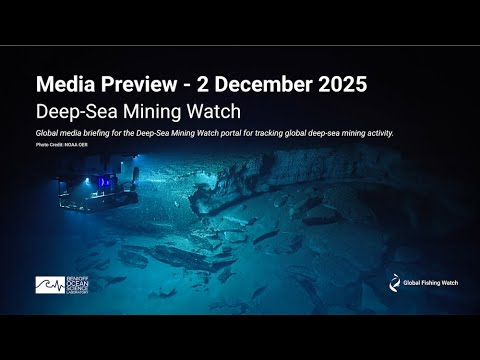
Deep-Sea Mining Watch Media Preview Recording
Deep-Sea Mining Watch Media Preview Recording Global Fishing Watch 82000 subscribers 4 likes 155 views 4 Dec 2025 Exclusive media launch for the Deep-Sea Mining Watch portal for tracking global deep-sea mining activity. Join us for the global media launch of Deep-Sea Mining Watch — a new and improved open-source monitoring tool for deep-sea mining vessel activity, led by the Benioff Ocean Science Laboratory at the University of California, Santa Barbara, and powered by Global Fishing Watch technology. This virtual media briefing introduced journalists and media professionals to the upgraded Deep-Sea Mining Watch portal — an interactive spatial data tool for tracking and visualizing vessels engaged in deep-sea mineral-related activities worldwide. Visit deepseaminingwatch.msi.ucsb.edu

Ocean This Week: Deep-Sea Mining Shock, Marine Monument Rollback, Whale Crisis & Vision Breakthrough
AS Marine Conservation & Travel Media 63 subscribers 6 likes 73 views 12 Feb 2026 This week in ocean news: A five-year study in the Clarion-Clipperton Zone in the central Pacific revealed nearly 800 species at a deep-sea mining site — while documenting a 37% decline in animal abundance where mining equipment disturbed the seafloor. The Northeast Canyons and Seamounts Marine National Monument off Cape Cod has been reopened to commercial fishing, removing protections from more than 12,000 square kilometers of deep-sea coral habitat. Researchers in the Southern Ocean are raising alarms over southern right whale reproduction, linking declining calving rates to shrinking Antarctic sea ice and krill shortages. Meanwhile, a simple weighted device is boosting pollack survival rates after catch-and-release from 56% to over 80%, and scientists in the Red Sea have identified a hybrid photoreceptor cell in deep-sea fish larvae that blends rod and cone functions — a discovery that could influence future camera technology and eye research. Full coverage and sources: https://sevenseasmedia.org — SEVENSEAS Media is an independent ocean journalism platform covering marine science, policy, and conservation. Subscribe for weekly ocean updates.

How humans are exploiting the oceans | DW Documentary
# How humans are exploiting the oceans | DW Documentary. What would be the consequences of industrial exploitation of the ocean floor? A deep-sea expedition in the Pacific explores this question. Raw materials have been mined on land for thousands of years, often with negative consequences for nature and people. Deep down in the ocean, valuable raw materials are stored en masse: manganese, nickel, cobalt, copper. Many of these materials are currently in great demand. Technically, it is possible to harvest manganese nodules, for example, in the deep sea. They are part of a deep-sea expedition to research the possible effects of harvesting raw materials on the ocean floor. Reporter Michael Stocks and his cameraman spent weeks aboard the ship, on which scientists are monitoring the deployment of a giant underwater harvesting machine on the ocean floor. Humans are dredging the sand from beaches, overfishing fish stocks worldwide - is the seabed now to be industrially exploited as well?